
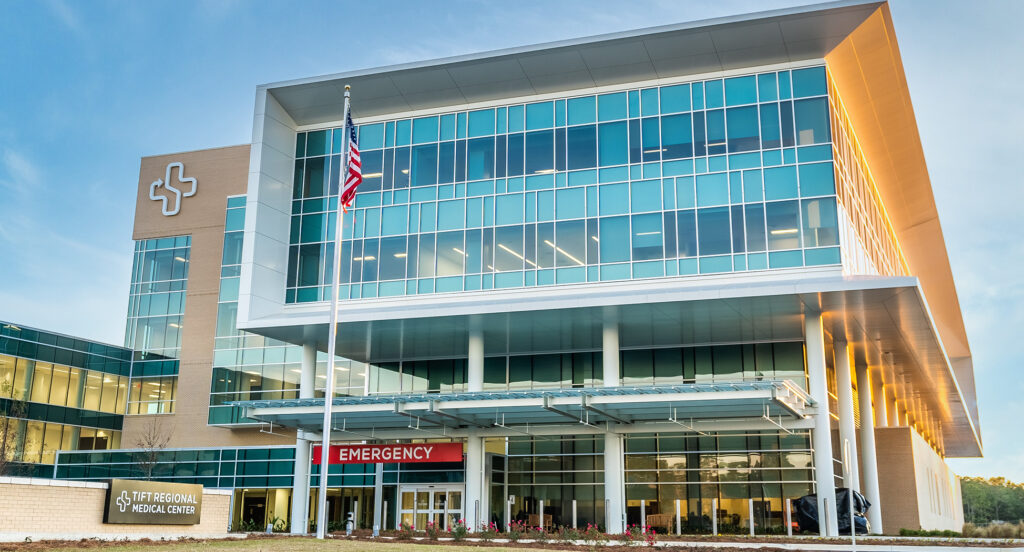
Southwell has partnered with TeleSpecialists to provide remote stroke care services at Tift Regional Medical Center (TRMC), connecting the hospital’s clinical team with board-certified stroke specialists. The program recently went live, providing the facility on-demand neurological expertise at the moment it matters most: when a patient’s outcome depends on rapid, accurate treatment decisions.
This collaboration with TeleSpecialists complement the services of TRMC’s two on-staff neurologists: Dr. Brad Lindsey and Dr. Tarek Bakdash.
For communities across South Georgia, geographic distance has long shaped what specialist care is available and how quickly it arrives. Southwell recognized that sustaining and strengthening TRMC’s stroke care required around-the-clock specialist support with the ER TeleStroke program offered by TeleSpecialists. When a suspected stroke patient arrives to the TRMC Emergency Department, a board-certified stroke specialist is on screen quickly, guiding the clinical team through assessment and entering orders directly into the hospital’s electronic medical record.
The TeleStroke program is the foundation of a broader neurological care continuum at TRMC. TeleSpecialists is also providing TeleNeuroHospitalist Rounding and remote electroencephalogram (EEG) interpretation, providing the community a path to comprehensive neurological support without leaving the region.
“Expanding access to rapid stroke care is exactly the kind of work that drives our team,” said Laurie Mayer, MBA, BSN, RN, CPAHA, Quality Program Specialist, TeleSpecialists. “TRMC brings the same clinical seriousness to this collaboration that we do, and that alignment is what makes positive outcomes possible. We look forward to what this program delivers for their patients.”
Dr. Kimberly Megow, Southwell’s Chief Quality and Academic Affairs Officer, said the TeleSpecialists partnership means patients presenting with stroke symptoms will be treated quickly and have improved chances of better outcomes.
“Getting a prompt diagnosis and treatment recommendation is crucial after a stroke,” said Dr. Megow. “It increases the chances that clot-dissolving therapies called thrombolytics can be delivered in time to reduce stroke-related disability. Time is brain for stroke patients, and quick diagnosis and treatment are crucial for giving patients the best chance of a good outcome.
Dr. Megow said it’s all about enhancing timeliness of care and improving clinical outcomes.
“This partnership with TeleSpecialists allows us to offer integrated, streamlined, and comprehensive stroke care,” she said. “As a regional referral center, TRMC is proud to be able to provide this program for the community.”